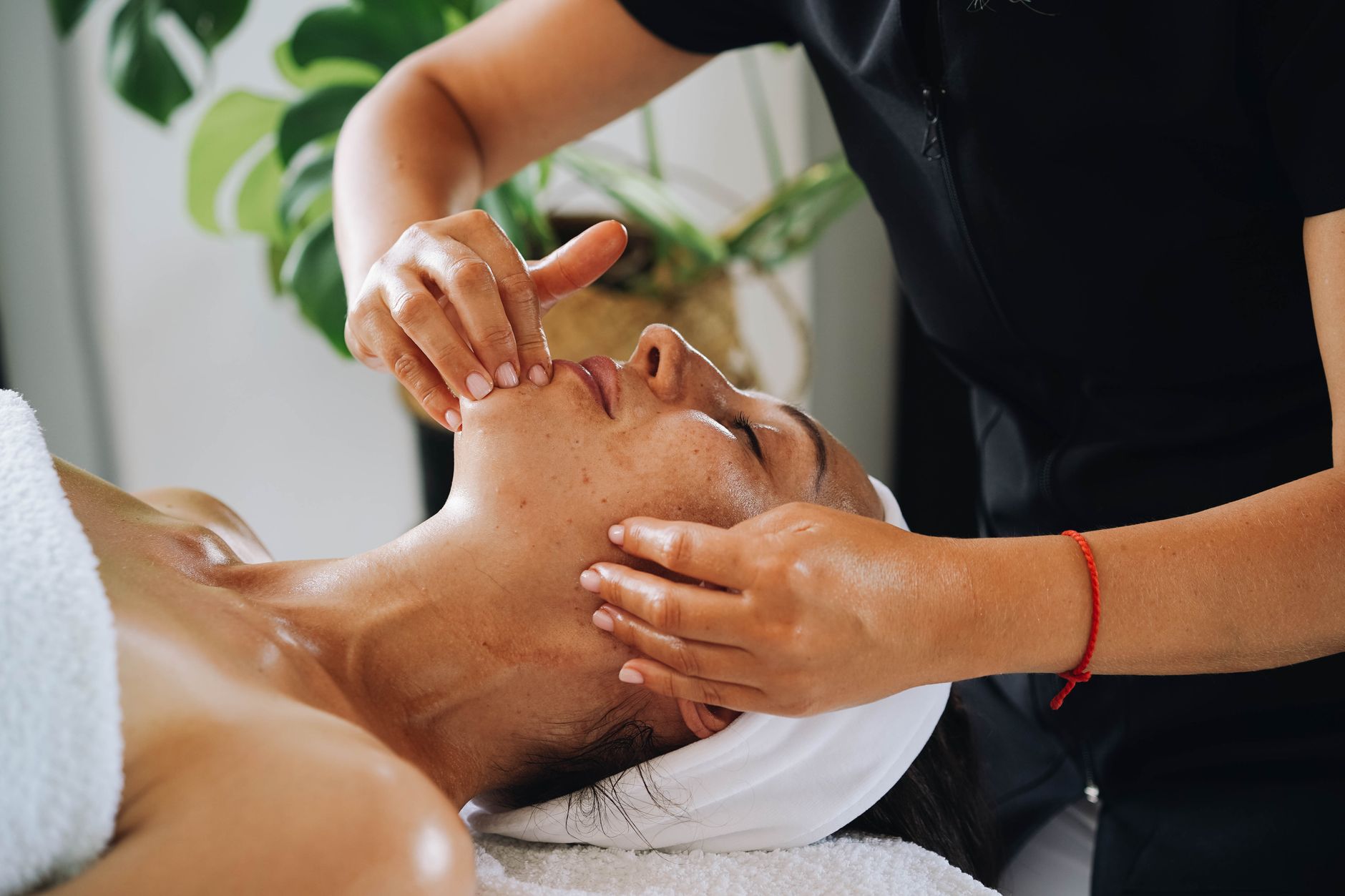
Somewhere between the tenth skincare step and the rise of cosmetic injectables, we collectively decided that beauty requires suffering—preferably documented. The buccal facial, a technique involving intraoral massage that manipulates facial muscles from inside the mouth, has migrated from Meghan Markle's facialist's treatment menu to every aesthetician's certification course. What was once a niche modality known primarily to those with unlimited Chanel budgets now dominates your feed, complete with unflattering mid-treatment photos and promises of "natural" lift.
The irony isn't lost: we're literally letting strangers put their hands in our mouths for cheekbones we could achieve with bronzer. But in an era where "no-makeup makeup" coexists with an aesthetic so groomed it requires professional intervention, buccal massage represents something more complex than vanity. It's the latest expression of optimization culture meeting our collective fatigue with obviously artificial enhancement. Here's what's actually happening.
The Meghan Effect Turned Niche Treatment Into Social Currency
When celebrity facialist Nicola Joss revealed that buccal massage was behind Meghan Markle's sculpted jawline, the technique achieved what most PR campaigns can't: aspirational mystique. The treatment's price point—typically $300-$600 per session—and its undeniably unglamorous execution created the perfect storm of exclusivity and authenticity. In a beauty landscape saturated with accessible trends, buccal massage offered something money and makeup couldn't easily replicate: insider knowledge and the willingness to endure discomfort for results. It's less about the actual facial restructuring and more about signaling you're the kind of person who knows about such things.
Injectables Fatigue Created a Market for 'Natural' Intervention
The over-correction era of cosmetic enhancement has produced its inevitable backlash, and buccal massage positions itself as the redemption arc. It appeals to the same demographic that once embraced filler but now wants reversal—women seeking definition without detection. The treatment promises to restore what we've supposedly lost to aging (or screen time, or processed food, or whatever contemporary scapegoat), offering a manual alternative to the syringe. Never mind that the results are temporary and the technique is, fundamentally, still an intervention. We've simply moved the goalpost on what counts as "natural," and intraoral manipulation somehow qualifies.
The Certification Industrial Complex Found Its Latest Goldmine
As demand surged, so did weekend certification courses promising to teach aestheticians this "ancient" technique—despite buccal massage being neither particularly ancient nor traditionally widespread. The barriers to entry are conveniently low: minimal equipment, maximum markup. For practitioners, it's a profitable add-on service with built-in scarcity (few people can perform it, everyone suddenly wants it). For clients, the specialized nature justifies the cost. The beauty education industry has perfected this cycle—identify trending treatment, democratize access through rapid training, saturate market, repeat. Buccal massage is simply the latest beneficiary of this well-worn pipeline.

Documentation Culture Turned Discomfort Into Content
The aesthetic of buccal massage is aggressively unflattering: mouths stretched open, faces contorted, the general indignity of someone's gloved hand manipulating your inner cheek. This is precisely why it thrives on social media. In an era of performed authenticity, showing yourself mid-treatment—vulnerable, unpretty, investing in self-improvement—reads as relatable transparency. The before-and-after format translates perfectly to Instagram's visual language, while the invasive nature of the technique generates curiosity and engagement. We've gamified beauty maintenance, and buccal massage offers both the struggle and the reveal that algorithms reward.
The Contouring Generation Sought Permanence (Or at Least Longevity)
Those who came of age during peak contouring—the 2010s era of aggressive facial reshaping via makeup—are now in their thirties and forties, confronting the reality that painted-on cheekbones require daily maintenance. Buccal massage offers a fantasy of outsourcing that labor: pay someone to manually create the structure you've been faking with Tom Ford bronzer. The treatment appeals to the same impulse that drove contouring's popularity—control over facial architecture—but repositioned as wellness rather than vanity. It's self-care that happens to deliver the same chiseled results we once associated with drag makeup techniques gone mainstream, just with the cultural cachet of a spa day instead of a makeup tutorial.
- The Meghan Effect Turned Niche Treatment Into Social Currency
- Injectables Fatigue Created a Market for 'Natural' Intervention
- The Certification Industrial Complex Found Its Latest Goldmine
- Documentation Culture Turned Discomfort Into Content
- The Contouring Generation Sought Permanence (Or at Least Longevity)