For decades, the crew neck occupied the dead zone of design decisions—neither turtleneck nor V, neither boatneck nor scoop. It was what you chose when you chose nothing at all. Then it dropped. Not dramatically, not to scandal-level depths, but just enough to expose the architecture of collarbones, the hollow at the base of the throat, the kind of skin that speaks before words do.
What started as a correction—designers tired of the turtleneck's stranglehold, wary of the plunge's vulgarity—has calcified into doctrine. From Khaite's cashmere tanks to The Row's tissue-weight tees, the lowered crew neck has become the default position of expensive taste. It suggests ease without trying, elegance without effort, and most crucially, it requires a body confident enough to fill the negative space.

The collarbone emerged as the new erogenous zone
Forget cleavage. The luxury market has relocated desire six inches north, where bone meets skin in clean geometric lines. This shift isn't about modesty—it's about specificity. The dropped crew exposes structure rather than softness, architecture rather than flesh. It's a neckline that rewards Pilates attendance and selective eating, which is precisely why it flourished in an industry that never met a disciplinary aesthetic it didn't adore.

Knitwear designers discovered the shoulder-slide effect
When you drop a crew neck, something else happens: the shoulder seam migrates. Suddenly every cashmere pullover wants to slip off one side, creating that studied undone look that costs $890 and requires strategic bra engineering. Designers like Totême and Allude have built entire collections around this calculated slippage, where the neckline's southward journey gives the whole garment permission to loosen its grip. It's the knitwear equivalent of a French exit—there one moment, drifting away the next.

The tee shirt became a luxury canvas worth $200
Nothing exposes the absurdity and genius of luxury fashion like a $200 T-shirt, and the dropped crew neck is what justifies the markup. Brands like James Perse, ATM Anthony Thomas Melillo, and Skin have built empires on perfecting the exact degree of neckline drop—too high reads juvenile, too low reads desperate. That quarter-inch of calibration, the weight of the cotton, the way it skims rather than clings: this is what you're paying for. Not fabric, but mathematics.
Stylists discovered it photographs better than anything else
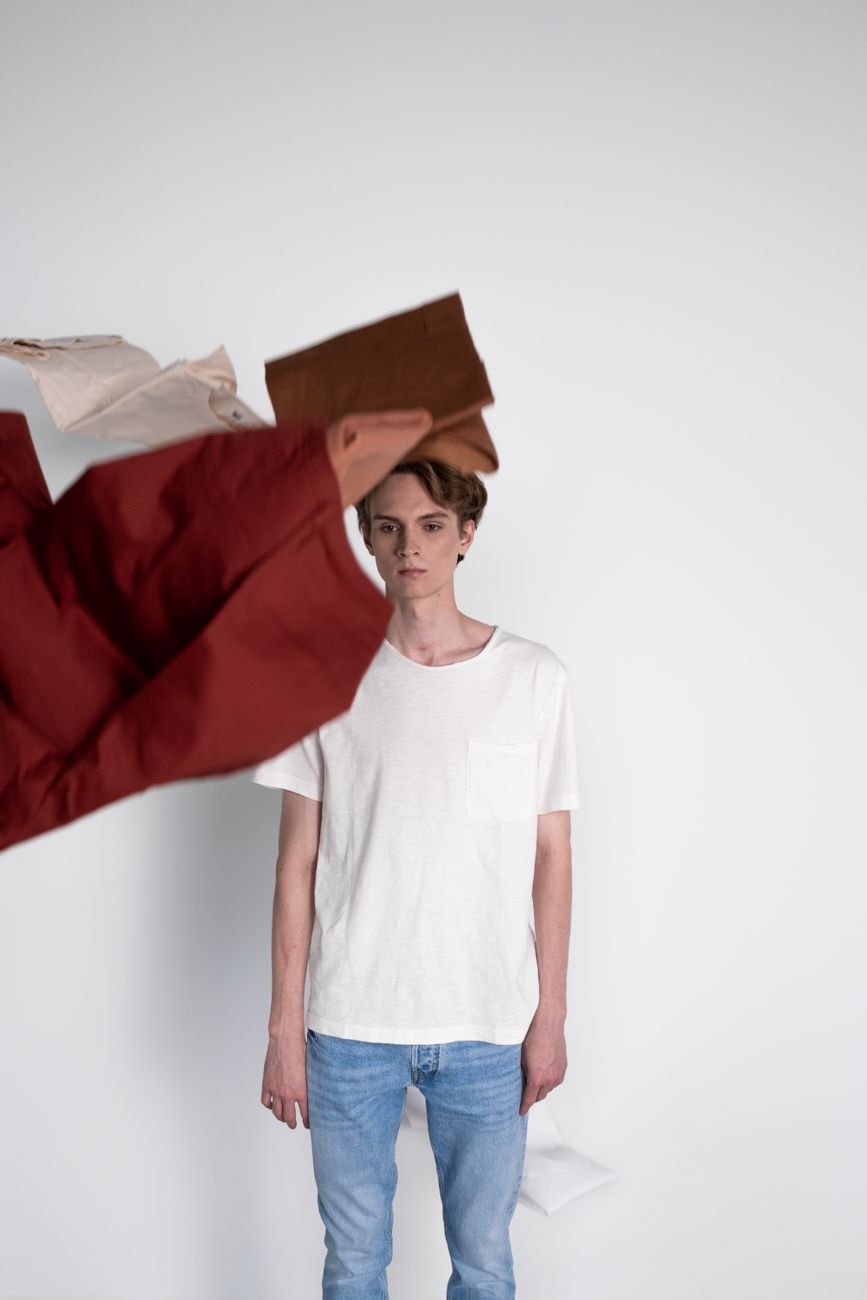
Open any magazine, scroll through any campaign, and the dropped crew neck is there—the hardest-working neckline in editorial. It's the Switzerland of styling: works with tailored trousers, works with denim, works with bias-cut skirts, works alone. Crucially, it frames the face without competing with it, which is why celebrities wear it to airports and stylists pull it for covers. In an image-saturated culture, the neckline that does less work somehow does more.
The fit became a class signifier more potent than logos
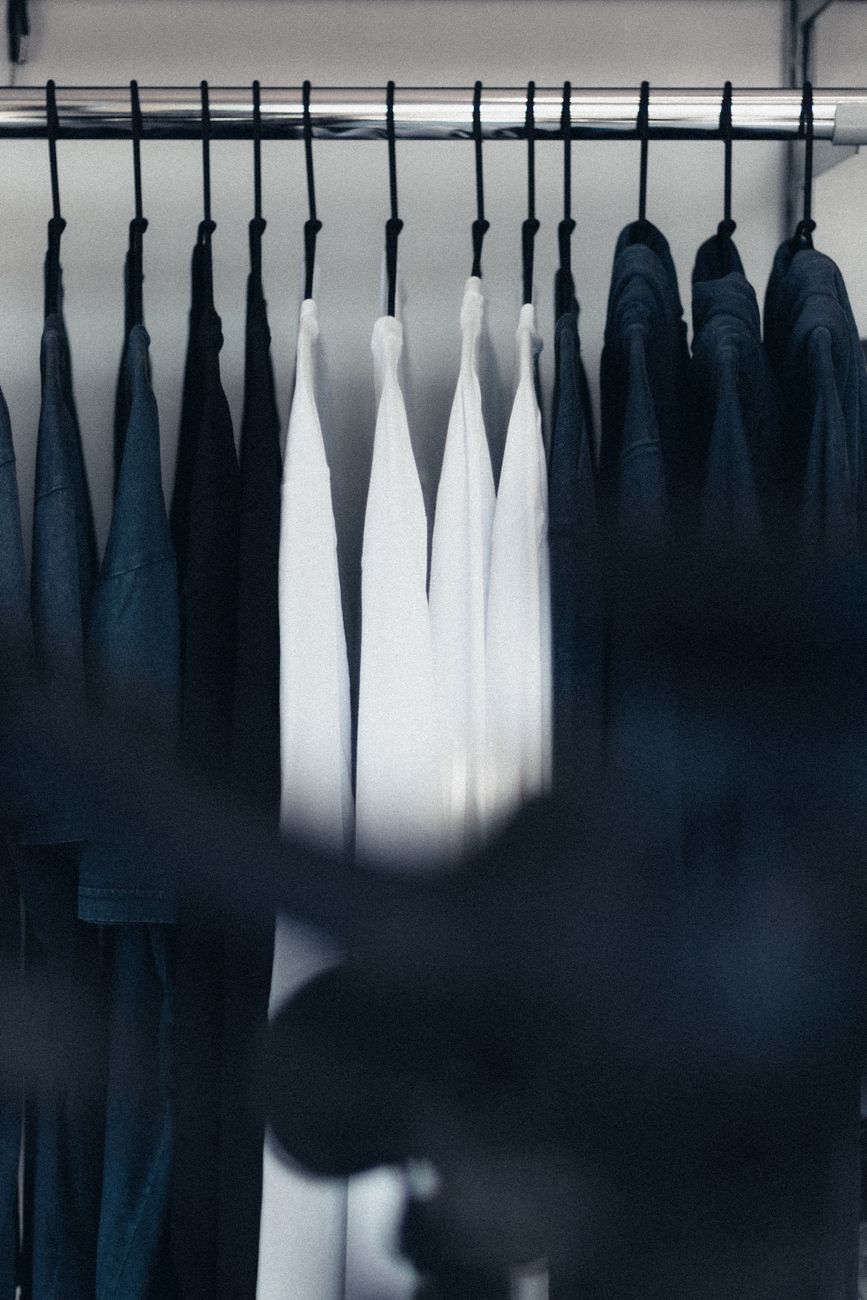
There's dropped, and then there's drooped. The difference is imperceptible in product shots and unmistakable in person—which is exactly the point. The correctly lowered crew neck sits precisely where it should, neither gaping nor straining, and achieving that requires either expensive fabric with memory or a body disciplined enough to be the same size every season. It's the quietest flex in fashion: a neckline that announces you understand fit at a molecular level, that you've found your uniform and can afford to repeat it in six colorways.