Somewhere between low-rise's resurrection and the quiet luxury brigade's obsession with 'clean lines,' designers collectively decided that belt loops were visual clutter. The result? Trousers with waistbands so architectural they require structural support they've explicitly rejected providing space for.
It's not incompetence—it's a statement. These pants announce that you're supposed to want a belt (heritage leather, naturally, visible hardware) while simultaneously making it technically impossible to wear one correctly. The waistband has become a canvas for design purity that happens to create a daily practical problem, which is apparently the point.

The Invisible Loop Replacement Economy
High-end brands now sell coordinating fabric belts with hidden interior clips, threading systems that work without loops, and even magnetic closures embedded in waistbands. These solutions cost approximately what you'd expect from an industry that created a problem to solve it with proprietary accessories. The belt becomes brand-specific hardware rather than a universal tool, which transforms a £40 leather strap into a £340 'trouser closure system.'
Tailoring's Revenge on Fast Fashion Logic
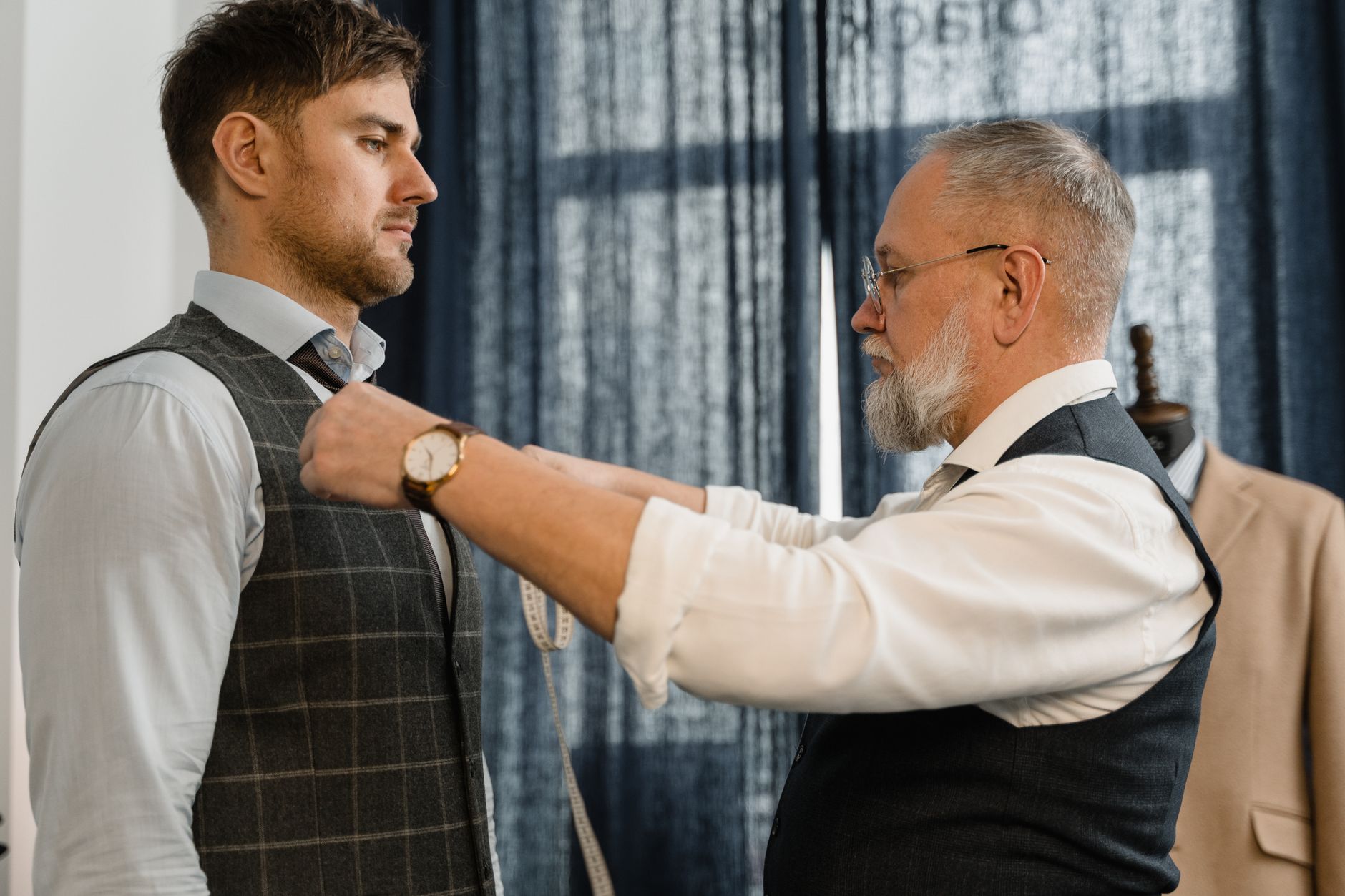
Loop-free waistbands require precise measurements—they can't be cinched or adjusted for bloating, big lunches, or the body's annoying habit of fluctuating. This isn't oversight; it's intentional gatekeeping that separates made-to-measure from off-the-rack thinking. The trend essentially announces that your trousers should fit so impeccably that adjustment hardware becomes theoretically unnecessary, even if practically absurd.

The Drawstring Trouser's Luxury Rebrand
Elasticated waists and drawstrings—once relegated to loungewear purgatory—now appear on £800 trousers in Italian wool. Designers discovered that calling it an 'internal adjustable waistband system' rather than 'elastic' makes formerly casual technology acceptable in tailored contexts. The absence of loops signals that these aren't work trousers requiring belts; they're elevated leisurewear that happens to cost more than your monthly grocery budget.
Side Tab Classicism as Modern Flex
The return of side adjusters and back cinch tabs from 1940s formalwear offers loop-free adjustment with historical precedent. These mechanisms dominated before belt loops became standard, meaning their current resurgence frames loops as the temporary aberration rather than the default. It's a quietly arrogant historical argument: belt loops were always a mid-century mistake we're now sophisticated enough to correct.

The Styled-Not-Worn Belt as Pure Ornament
Runway images increasingly show belts threaded through interior waistbands, tied loosely around hips, or simply draped as accessories rather than functional closures. The belt becomes jewelry—a reference to utility rather than its embodiment. This aesthetic asks you to acknowledge the belt's traditional purpose while demonstrating you're beyond requiring it, which is either deeply conceptual or impressively pretentious depending on your tolerance for fashion as performance.